Bluetooth Low Energy Audio Deep Dive: Architecture, Protocols, Codecs, and Live Demo
Bluetooth LE Audio brings powerful new capabilities to wireless audio, with new protocols, modern codecs, and entirely new use cases that go far beyond classic Bluetooth audio.
Here are just a few real-world examples:
Multi-stream audio
Picture yourself at the airport, listening to a podcast through your earbuds. At the same time, you’ve subscribed to your gate’s public announcement stream. When boarding announcements begin, your podcast automatically ducks or pauses—just enough for you to hear the gate agent clearly, then seamlessly resumes.
Public audio broadcasts
- In a museum, simply open your phone, choose your language, and connect to the exhibit’s audio guide—using your own headphones, no rental device needed.
- At the gym, tap to receive audio from any TV screen, even if you’re on the other side of the room.
- In train stations, airports, theaters anyone can join location-based audio streams.
This talk provides an introduction to BLE LE audio: from the new features and protocols to the challenges in integrating it in a real scenario with a demo between a devkit and an headset.
What this presentation is about and why it matters
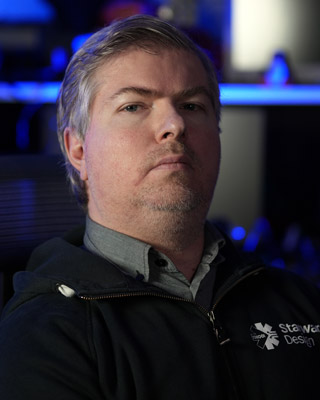
How does Bluetooth Low Energy Audio change the way embedded devices handle streaming, synchronization, and real-world audio products? Matteo Vit approaches that question with a practical architecture tour, moving from classic Bluetooth audio limits into the LE Audio stack, the new isochronous transport, mandatory codec choices, and the profiles and services that sit on top. He also grounds the material in a live demo on a Nordic Semiconductor nRF5340 Audio Development Kit, then walks through source code and system integration details such as I2S clocking. This is a strong fit for anyone trying to understand how the pieces fit together in an actual product.
Who will benefit the most from this presentation
- Embedded software engineer working on Bluetooth products and needing a clearer map of LE Audio
- Firmware developer integrating audio sources, codecs, or I2S timing on a constrained SoC
- Systems engineer evaluating unicast, broadcast, or multi-device audio behavior
- Product or platform engineer comparing classic Bluetooth audio with LE Audio capabilities
- Developer who wants to see a real nRF5340-based example rather than only standards language
What you need to know
A working familiarity with Bluetooth and embedded development will help, especially these topics:
- Basic Bluetooth concepts such as host, controller, and profiles
- General idea of audio streaming and codec use on embedded devices
- Comfort reading firmware configuration and source code
- Some awareness of I2S or other digital audio interfaces is helpful for the synchronization section
Glossary (terms used in this talk)
- Isochronous streams: Bluetooth transport streams designed for time-bounded delivery, where timing consistency matters as much as payload delivery. They are used for both unicast and broadcast audio.
- Presentation delay: A scheduled offset between packet arrival and the deadline when audio must be rendered. It creates time for reception, decoding, and buffering while trading off against end-to-end latency.
- Common Audio Profile (CAP): A coordinating profile that defines shared procedures for using LE Audio services in unicast and broadcast scenarios. It helps devices present a consistent audio behavior across multiple use cases.
- LC3 (Low Complexity Communication Codec): The mandatory codec introduced for Bluetooth LE Audio. LC3 is designed to provide better perceived audio quality than SBC at much lower bitrates and includes tools such as packet loss concealment to improve robustness in lossy RF environments.
- CIS (Connected Isochronous Stream): A point-to-point isochronous link between two connected Bluetooth LE devices that provides time-synchronized channels for audio in one or both directions.
- CIG (Connected Isochronous Group): A logical group of one or more Connected Isochronous Streams that share a common time reference and scheduling parameters to keep multiple streams tightly synchronized across devices.
- BIG (Broadcast Isochronous Group): A logical container for broadcast isochronous streams used in one-to-many LE Audio broadcasts; a BIG defines shared timing and transfer parameters for the broadcast streams.
- GAF (Generic Audio Framework): A top-level framework in the Bluetooth LE Audio host stack that ties together profiles and services to support unicast, broadcast, call handling, and other LE Audio use cases coherently.
Toolbox (mentioned in this talk)
- Zephyr RTOS: A scalable real-time operating system for connected and resource-constrained devices. It often owns much of the system startup flow, including hardware initialization and thread setup.
- nRF5340 Audio Development Kit: A development kit built around the nRF5340 for prototyping Bluetooth LE Audio and related embedded audio use cases. It is used to test firmware, audio routing, and synchronization behavior.
- Nordic Semiconductor nRF Connect SDK: Nordic's software development kit for developing applications on supported Nordic devices. It provides the build system, libraries, and tooling used to configure and build embedded firmware.
- nRF XLEAP: A Nordic software directory or package location mentioned in the demo for the codec binary. It is used as a project resource location rather than a standalone standard tool.
- Zen Hybrid Pro: A Bluetooth headset used in the demo to exercise LE Audio behavior. It serves as an example of a consumer audio device that can join the workflow under test.
Final thoughts
Practical and demo-driven, this session gives viewers a useful mental model for how LE Audio is assembled from transport, profiles, codecs, and device-side timing. The real value is in the connections Matteo makes between standards language and embedded implementation details, especially if you are trying to turn protocol knowledge into firmware decisions. It will be especially useful for engineers working on Bluetooth audio products, Nordic-based designs, or systems where synchronization is part of the product experience. The talk feels like an engineer opening the toolbox and showing what matters.
This overview is AI-generated from the session transcript. Spot an issue? Let us know.


No comments or questions yet. Be the first to start the conversation!