Embedded Systems in the Age of AI: What’s Changing and What Still Matters
Embedded systems are entering a period of rapid change driven by rising system complexity, always-connected devices, and the early impact of AI on both development workflows and products themselves. What was once a siloed discipline—bare metal firmware on fixed hardware—has become a multidisciplinary stack spanning silicon, operating systems, security, connectivity, cloud integration, and now machine-learning at the edge.
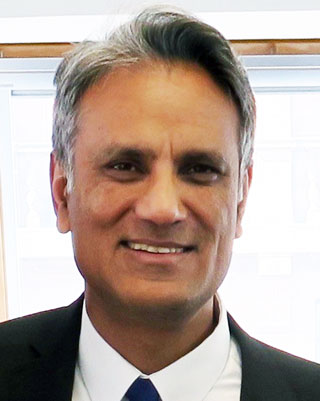
In this talk, Lance Harvie draws on years of experience as an engineer and specialist recruiter to map how embedded development has evolved from EPROM-based systems to modern SoCs running Embedded Linux and AI-assisted toolchains. He breaks down where AI is already affecting firmware, PCB, and chip design, where the hype exceeds reality, and why “vibe coding” carries real risk in safety-critical and production hardware.
The session also cuts through hiring myths:
- Why most embedded job descriptions are unrealistic.
- What skills are genuinely in demand.
- Why strong fundamentals, system-level thinking, and communication matter more than ever.
- How engineers should position themselves as AI tools and automated recruitment processes become standard.
This is a practical, experience-driven view of where embedded systems are heading, what engineers need to learn next, and what still matters if you want to build reliable products and long-term careers in an AI-shaped industry.
What this presentation is about and why it matters
How much of embedded engineering is really changing in the age of AI, and how much still depends on the same fundamentals? Lance Harvie tackles that tension from the perspective of a recruiter who has also worked as an engineer and product manager. This is an opinionated, practical talk, grounded in what he sees across firmware, PCB work, embedded Linux, security, and hiring. He also connects those technical shifts to the job market, including how candidates present themselves and how employers evaluate them. It is useful for engineers, managers, and job seekers who want a clear view of where embedded work is moving and what remains worth investing in.
Who will benefit the most from this presentation
- Embedded engineers who are weighing AI tools, but still need to ship reliable products.
- Firmware, Linux, or RTOS developers who want to understand current market demand.
- Electronics and PCB engineers who also touch testing, security, or system integration.
- Job seekers in embedded roles who want better CV and interview practices.
- Hiring managers or recruiters who work with broad, mixed-discipline embedded skill sets.
What you need to know
No deep technical prerequisites, but the talk lands better if you already know the shape of embedded work and hiring. A basic familiarity with the following helps:
- Firmware, PCB design, or embedded software as practiced in real projects.
- The difference between bare metal, RTOS-based systems, and embedded Linux.
- Common hiring process terms such as CV, ATS, and interview loops.
- General awareness of AI-assisted development tools and on-device machine learning.
Glossary (terms used in this talk)
- RTOS (Real-Time Operating System): An operating system designed to provide predictable timing behavior for real-time applications.
- ATS (Applicant Tracking System): Software used to collect, filter, and rank job applications before a human review. Candidates often need to align their resume content and keywords with the posting to avoid being screened out early.
- Vibe coding: An AI-assisted development style where code is generated or iterated quickly from prompts, with the emphasis on speed and rapid experimentation. It can accelerate prototyping, but it also changes how review, verification, and ownership need to work.
- Large language model (LLM): A machine-learning model trained on large text corpora to generate or transform language. In embedded contexts, these models may be used in development workflows or deployed on-device for local inference.
- Bluetooth: A short-range wireless communication standard and protocol stack used by many embedded devices.
- Embedded Linux: Linux configured and deployed for embedded devices, often customized with a smaller kernel, device drivers, and userland appropriate for constrained hardware. Embedded Linux is widely used for complex embedded systems and supports device driver and kernel development.
- On-device machine learning: Machine learning models and inference executed locally on the device or chip rather than in the cloud, enabling lower-latency, offline, or privacy-preserving ML features. This includes smaller LLMs and neural networks optimized for embedded hardware.
- Wi-Fi: A wireless local networking technology used to connect devices without cables. It is commonly used when robots or companion computers need flexible network placement.
Toolbox (mentioned in this talk)
- Git: A distributed version control system for tracking changes in source code and coordinating collaborative development.
- Linux: A family of open-source operating systems widely used as a host environment for embedded development, servers, and development tools. It provides a broad base of runtime services, libraries, and utilities for building and running software.
- Zephyr: Zephyr is an open-source real-time operating system for resource-constrained devices, supported by many embedded toolchains and debuggers.
- Copilot: An AI coding assistant that helps generate, rewrite, or explain code inside a development environment. Tools in this class can speed up routine work, but still need careful judgment and validation.
Final thoughts
Warm, opinionated, and grounded in hiring reality, this talk gives you a useful lens on how AI is reshaping embedded work without pretending the old fundamentals have disappeared. The value here is less a checklist than a sharper way to think about skills, credibility, and how technical roles are evolving under pressure from automation. It will help engineers, managers, and job seekers who want to stay relevant in a changing field. The spirit of the session is straightforward, adapt deliberately, and keep your engineering judgment intact.
This overview is AI-generated from the session transcript. Spot an issue? Let us know.
Fair feedback and I appreciate you taking the time to write it out properly. You are right that the headline promised more than I delivered on the AI vs human question. That is on me. The job market framing crept in because I was reading the room as a mixed audience.
Linux drivers, yes. Stable API, abundant training data, binary correctness. A human burning two days on a mainstream chip driver is wasting margin. Where AI still needs supervision: obscure silicon and undocumented vendor SDK behaviour. It hallucinates confidently in those gaps.
AI works from text. It cannot scope a signal, correlate a thermal anomaly, or close a physical measurement loop. When the bug lives in the layout rather than the code, the model is blind. That boundary is still human territory.
Vibe coding on small MCUs works for standard bring up on popular silicon. Falls apart on timing sensitive code, interrupt driven shared state, and errata that never made the docs. The discipline of reading the datasheet has not died. It has moved upstream into knowing what the AI is likely to get wrong.
AI agents, three skills. Knowing when the output is wrong, which requires domain depth. Decomposing tasks into bounded, verifiable stages. Knowing exactly where to put the human checkpoint. Not everywhere. Not nowhere.
Job changing, volume work will compresses. What expands is anything requiring physical intuition, system level thinking, and accountability. The work where being wrong has real consequences and someone has to own it.
On social skills, yes the job shifts toward requirements work. And yes AI will push into that space too. What it lacks right now is accountability. An engineer who has shipped a product that failed in the field asks sharper questions than a model generating probable ones. That gap will narrow. It will not close quickly.
I will aim to make future videos more technical and higher production quality.
Good talk about technological progress and what interviewees should be aware of these days. I found the strange camera zooming effect/fault disconcerting and the karaoke-style subtitles odd (given that all the talks already have subtitle options).
Fair points, and appreciate the feedback. The zoom effect was a post-production misstep and the subtitles I'll drop next time given the platform already covers that. Glad you got some value.


I'm sorry I really didn't enjoy the talk at all. Besides the annoying karaoke text (I minimized the window and pushed the lower part out of the screen) for me the content did not fit the head line.
I was expecting to hear some opinion on what parts of the embedded stack is AI getting real good at and what kind of things seem to be staying for humans. I really didn't expect anything about how to get on the job, at least not for half the talk.
You had the example with Linux drivers. Do you think that is something that humans need to do? I would guess that part is perfect for AI. There is a clear API with tons of examples, the task is usually not too complex and the results are easy to confirm.
Maybe next time you could share some insights on if AI is already good at parts where you switch worlds between electronics and programming. If using good commercial LLMs, is Vibe Coding getting the job done on small MCU devices including I/O? What skills do you need to orchestrate Agents? How is the job changing where you used to develop embedded systems and what are the things we still need the human interaction?
You said social skills will be more important. Do you think the job of engineers will shift to more consulting and helping Customers understand what they want? Why can't AI do that as well?
I'm sorry, I probably just had wrong expectations. I did like that you spoke in a way that was easy to follow and easy to understand. Thanks for taking the time. I appreciate that you passed some of your thoughts to the attendees of this conference.